I Love You Massachusetts, But We Need To Talk


Why the Commonwealth we love is at a turning point
Brian Halligan’s recent take on Massachusetts should be a gut check for anyone financially, emotionally or personally invested in the Commonwealth’s future. The HubSpot co-founder and MIT lecturer didn’t sugarcoat the situation: biotech losing momentum, AI companies choosing other regions, federal research cuts threatening flagship institutions, and young talent questioning whether this place is even “cool” enough to justify the soaring cost of living. His blunt summary, that Massachusetts has become “expensive as sh-t," resonated because it captured something many residents and employers have quietly felt for years.
Behind the economic headlines is something more personal and more urgent. Families are questioning whether they can afford to raise kids here. Young professionals wonder whether they will ever be able to buy a home, start a family and set down permanent roots here. Entrepreneurs increasingly weigh launching their next venture somewhere more predictable and affordable. Even longtime residents who deeply love this place feel an unsettling sense that the future is becoming harder to believe in as housing, childcare, and everyday costs continue to climb with seemingly no end in sight.
And yet, before diagnosing what is broken, it is worth remembering why Massachusetts has been worth fighting for in the first place.
Why We Love This Place

Massachusetts packs an extraordinary amount into a small geographic footprint. Residents benefit from world-class universities and hospitals, a dense innovation ecosystem, and communities shaped by centuries of civic engagement and cultural life. Walkable historic downtowns sit alongside vibrant urban neighborhoods, while beaches, mountains, and forests remain only a short drive away. Public schools, hospitals, sports teams [yes even despite the recent Super Bowl loss] and libraries consistently rank among the best in the nation, and a tradition of public investment has created communities that feel grounded and resilient.

Massachusetts has long been a crucible of American innovation, blending intellectual firepower with industrial grit. From the laboratories and startup corridors of Cambridge, where universities, entrepreneurs, and venture capital have fueled revolutions in technology, biotech, and artificial intelligence, to the red-brick mill cities of the Merrimack Valley, where early textile manufacturing helped launch the nation’s Industrial Revolution, the Commonwealth has repeatedly reinvented how people live and work. In the Berkshires, former factory towns and creative communities have transformed legacy industrial spaces into hubs for arts, culture, advanced manufacturing, and small-scale entrepreneurship.
Across centuries, Massachusetts has paired bold ideas with a willingness to experiment and reinvent itself, turning mills into makerspaces, research into real-world solutions, and dense historic neighborhoods into fertile ground for the next wave of economic and social progress.
This combination of opportunity and quality of life has long justified the higher cost of living. The implicit bargain was simple: while Massachusetts might be expensive, it offered unmatched access to education, innovation, culture, and community. Increasingly, however, that bargain is breaking down. The state’s greatest strengths remain intact, but the gap between what people are asked to pay and what they feel they can realistically build here continues to widen.
The Bargain Is Breaking
Young families and mid-career professionals are quietly leaving
The affordability crisis is no longer theoretical. Between 2021 and 2022, Massachusetts lost more than 22,000 residents aged 25 to 44 annually with many existing young residents citing cost of living as the biggest factor in their contemplating a move out of state. These are not marginal workers seeking temporary relief from high rent; over half earn between 1.3 and 2.6 times the state’s average income. They represent the very people Massachusetts needs most, individuals entering peak earning years, starting families, launching businesses, and contributing to civic life.
Cost comparisons with competitor regions are stark. In North Carolina’s Research Triangle, housing costs are roughly 47% lower. Salaries that barely cover rent in Greater Boston can purchase a home with a yard in Charlotte or Durham. Combined with lower childcare costs and more predictable living expenses, these regions offer a level of stability that increasingly feels unattainable here. Surveys show nearly a quarter of young residents plan to leave Greater Boston within five years, with affordability consistently cited as the deciding factor.
Companies Are Following the Talent
Economic competitiveness is increasingly tied to livability
Businesses are paying attention. Companies evaluating expansion decisions are not just comparing tax rates or incentives; they are asking whether employees can afford to live nearby. Regions like Raleigh-Durham, Nashville, and North Texas have become magnets for technology and life sciences growth because they provide environments where workers can realistically build long-term lives.
Remote work has accelerated this shift, allowing professionals to maintain high-paying jobs while relocating to lower-cost regions. As workers leave, companies face a growing dilemma: remain in high-cost markets with constrained talent pools or follow their workforce to places where growth is easier. Economic decline rarely happens in dramatic collapse; it unfolds gradually as people and employers quietly relocate to places where the math works.
The “Eds and Meds” Safety Net Is Fraying
A historic strength facing structural pressures
Massachusetts has long relied on its universities, hospitals, and research institutions as an economic backbone. Generating more than $150 billion annually and supporting nearly 900,000 jobs, this sector has anchored the state through economic downturns and fueled decades of innovation.
Today, however, that foundation faces new pressures: federal research cuts, global competition, and rapid shifts toward emerging industries such as artificial intelligence and climate technology. Biotech — once an unquestioned growth engine — has cooled from its recent peak, and Massachusetts’ representation among leading AI companies remains surprisingly limited. While these institutions remain essential, relying solely on past strengths without adapting to new realities risks leaving the Commonwealth behind.
The Root of the Crisis: A Half-Century of Housing Policy Failure
The “everything bagel” of regulation has made home building nearly impossible
Housing sits at the center of nearly every challenge facing Massachusetts today. Home prices have surged, vacancy rates remain extremely low, and even high-income professionals struggle to find attainable options. This crisis did not appear overnight; it is the result of decades of exclusionary zoning restrictions, many put in place in the 1960s and 1970s, permitting hurdles, and an “everything bagel” approach to regulation that layers well-intentioned requirements until even modest projects become nearly impossible to complete.

Neighborhoods that once evolved gradually, adding townhomes, triple-deckers, and small apartment buildings, have effectively frozen in place, locked in amber by the twin combination of archaic zoning regulation and reitcent to change NIMBY attitudes. The result is predictable: limited supply, rising prices, perpetuaed sprawl and a growing exodus of people who might otherwise have built their futures here.
What Needs to Happen
Massachusetts has never solved big problems with incremental thinking. If the Commonwealth wants to remain a place where people can live, innovate, and raise families, it needs a coordinated strategy that addresses housing, affordability, infrastructure, and economic growth together. Here’s what a serious rebuilding effort could look like:
1. Build Housing That Meets Demand

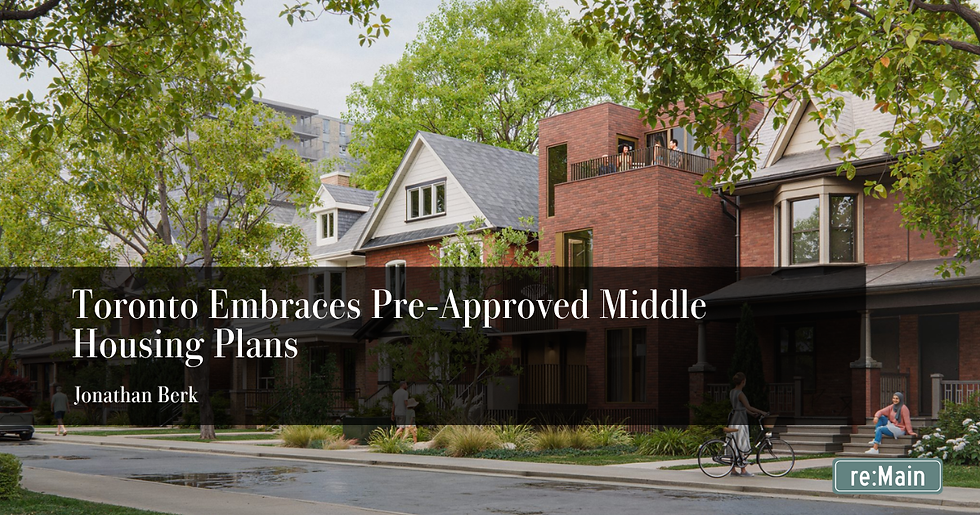
Massachusetts must move beyond symbolic one off housing reforms and commit to building at the scale our economy and population demand. That means legalizing more multi-family and “missing middle” housing, triple-deckers, townhomes, courtyard apartments, and small mixed-use buildings, particularly near transit, walkable downtowns, and existing job centers. Our current “everything bagel” regulatory approach layers approvals, design reviews, affordability requirements, environmental standards and procedural hurdles until even modest projects become financially impossible, so streamlining permitting and establishing predictable timelines is essential. Updated building codes should encourage diverse housing typologies that support young families trying to put down roots and older residents hoping to age in place. Both nonprofit and private developers need clearer incentives to build housing that serves a wide range of incomes.
The attitude among some on Beacon Beacon Hill that we’ve “done housing” because one major reform cleared the finish line in the past six years is not just misguided—it’s profoundly out of step with the magnitude and urgency of the crisis facing residents and employers across the Commonwealth. One or two policy changes per legislative session may check a box politically, but they are a drop in the bucket compared to what’s needed to meaningfully close the housing gap, stabilize costs, and restore economic competitiveness. Meanwhile, peer states confronting their own affordability crises have embraced sustained, iterative reform, returning year after year to modernize zoning, streamline approvals, expand by-right development, and test new financing and production strategies at scale. Massachusetts, by contrast, too often treats each incremental step as a victory lap rather than part of a long-term, coordinated agenda. That complacency risks leaving families priced out, young people pushed away, and employers hesitant to grow here. Meeting the scale of the challenge will require a cultural shift toward urgency and persistence, recognizing that real progress demands a steady drumbeat of reform, not sporadic breakthroughs separated by years of inaction.
2. Make Raising Kids Affordable Again
Housing is only one part of the financial equation pushing families out of Massachusetts. Childcare costs regularly exceed $20,000 per child annually, creating enormous pressure even for households with strong incomes. Expanding childcare subsidies beyond the lowest-income tiers would help stabilize middle-income families who currently fall through the cracks. Increased public investment in early education infrastructure, from workforce development to new facilities, can both improve quality and expand supply. Meaningful tax credits that reflect the real cost of raising children in a high-cost state would allow more families to stay rooted in the communities they love. If Massachusetts wants to retain young talent and encourage long-term civic investment, it must make it financially realistic to start and raise a family here.
3. Fix and Sustainably Fund the MBTA
A reliable public transportation system is not a luxury; it is foundational economic infrastructure that determines whether workers can access jobs and whether employers can grow sustainably. Chronic underinvestment and governance challenges have eroded trust in the MBTA, making the region less competitive and pushing more residents toward car-dependent lifestyles that increase both household expenses and regional congestion.
Establishing long-term, predictable funding mechanisms is essential to move beyond crisis management and toward sustained modernization. Reliability and safety must be immediate priorities, but long-term expansion and system upgrades should also align with housing growth and regional development goals. A well-functioning transit system not only reduces costs for families but also strengthens economic mobility and makes dense, walkable communities viable again.
Bringing reliability to the system also means viable expansion in coverage and service. Things like Regional Rail, talked about for seemingly generations, must become reality providing frequent, reliable, affordable transit service to regions across the Commonwealth, not geared just for commuting into and out of Boston. Investments in transit expansion are akin to injecting rocket fuel into local economies allowing increased, needed, private sector investment to follow boosting our communities and our economy.
4. Win the Next Innovation Economy
Massachusetts has long relied on universities, hospitals, and research institutions as economic anchors, but the competitive landscape is shifting quickly. With federal research funding facing uncertainty and emerging industries like AI and climate tech expanding in other regions, the Commonwealth must take a more proactive stance. Strategic state investments can help backfill critical research gaps while attracting new companies and talent.
Reducing bureaucratic barriers for startups, supporting early-stage entrepreneurship, and ensuring access to flexible workspace and capital will help maintain Massachusetts’ reputation as a place where innovation thrives. Equally important is creating clear pathways that encourage graduates from local universities to stay and build careers here, rather than relocating to more affordable regions. Winning the next wave of innovation requires both economic policy and a broader commitment to making life here attainable for the people who power that innovation.
Admittedly, this is the part I know the least about and hope that we can tap into the collective leadership, insights and knowledge of industry leaders like Brian Halligan and it's encouraging to see political leaders like Governor Healey listening to Brian's concerns and insights into what Massachusetts can do better to support our innovation ecosystem.
5. Let Massachusetts Have Fun Again
This is a topic I know a fair amount about. I've seen the permitting hurdles and regulatory morass first hand across our Commonwealth, not just for housing but for damn near everything. Events in public parks, beer gardens on plazas, winter activations on main streets and small business permitting and licenisng hurdles.
Massachusetts’ culture of over-regulation extends beyond housing into everyday community life, often stifling the vibrancy that makes cities and towns attractive places to live. Overly restrictive permitting processes can make it difficult for small businesses, restaurants, artists, and community organizers to experiment with new ideas, from outdoor dining and beer gardens to live music and cultural events. Embracing concepts like social zones, flexible public spaces, and streamlined permits for small-scale programming can help revitalize downtowns and strengthen community identity. Vibrancy is not a frivolous luxury; it is a core component of economic competitiveness, talent retention, and overall quality of life. If Massachusetts expects people to pay a premium to live here, it should also foster an environment where creativity, culture, and public life can flourish.
Our Next Revolution
Massachusetts has reinvented itself before, and can do it again
Massachusetts did not become Massachusetts by playing it safe. We have always moved forward by choosing courage over complacency, by building, experimenting, and refusing to accept decline as inevitable. That same spirit is needed now, not someday, not incrementally, but with urgency and conviction.
Loving this Commonwealth is not passive. It is an active commitment to confront what is broken and to fight for a future that is more affordable, more inclusive, and more dynamic than the one we inherited. It means welcoming new neighbors, modernizing old systems, and choosing growth over fear. Progress is not a betrayal of our past, it is the reason our past matters.
The future of Massachusetts will be shaped by the choices we make together, right now, in city halls and the State House, in community meetings, in boardrooms, and in our own neighborhoods. This is a call to leaders to lead boldly, to residents to demand better, and to all of us to remember that our future is not static & predetermined, it's a result of our decisions today.
Massachusetts has never waited for permission to lead, and this is no time to start. Change is coming whether we like it or not; the real choice is whether it happens to us or because of us. Let this be the moment we build boldly, innovate relentlessly, and make the Commonwealth not just a place people love, but a place where the next generation can afford to live, create, and thrive. The future isn’t something that happens to us, it’s something we choose to shape, starting now.
Jonathan Berk is an experienced strategic urbanist, attorney, and policy innovator with over a decade of expertise in promoting reforms in housing, land use, and economic development through impactful public-private initiatives. He possesses deep knowledge of the structural obstacles to housing production and economic growth, such as regulatory hurdles and financing challenges, and has a proven track record of creating collaborative solutions that unlock opportunities and achieve measurable results. He is a skilled communicator, published thought leader, and a trusted advisor to policymakers, planners, and advocates working where policy, capital, and community intersect.


Comments