Small-Scale Housing, Big-Time Solution: The Missing Middle Blueprint in Massachusetts


Massachusetts needs 222,000 new homes in the next decade. Right now, we’re building at a pace that barely gets us to half of what’s needed. Even with recent reforms like the MBTA Communities Act and the ADU legalization law, we’re still staring down a massive housing gap. So where do we find them?
One answer: missing middle housing... duplexes, triplexes, townhouses, and small apartment buildings that used to be common and quietly filled in our neighborhoods, but are now effectively banned across much of the state.

A new report from the Joint Center for Housing Studies at Harvard and researcher Amy Love Tomasso, lays out a clear, actionable, and grounded path forward: six policy reforms that Massachusetts must adopt if we’re serious about legalizing and building the missing middle.
Six Key Reforms to Unlock Missing Middle Housing
1. Legalize Missing Middle Housing in All Residential Areas
Let’s stop making small-scale multifamily housing illegal by default. The report calls for a tiered approach like Vermont’s duplexes everywhere single-family homes are allowed, and up to fourplexes or more in areas with sewer and water infrastructure. Let’s make it legal, by-right, statewide.
2. Remove or Reduce Parking Minimums
One of the most underappreciated barriers to small-scale housing: parking mandates. Requiring two parking spots per unit on a tight urban lot can kill a duplex before it even gets drawn. Cambridge and Somerville have already removed parking minimums. It’s time for the rest of the state to follow suit, especially near transit.
3. Reduce Minimum Lot Sizes
You can’t build small homes on large lots. Most of our zoning requires thousands of square feet for even one house. Lowering minimum lot sizes opens up opportunities for starter homes and townhouses and helps put ownership back on the table for middle-income families.
4. Increase Lot Coverage & Reduce Setbacks
Let’s stop requiring homes to sit in the middle of vast, empty lots. The report shows how reforming setback rules and increasing lot coverage—especially in walkable, transit-rich areas—can bring back efficient, compact housing forms like bungalow courts and row houses.
5. Streamline Development Review
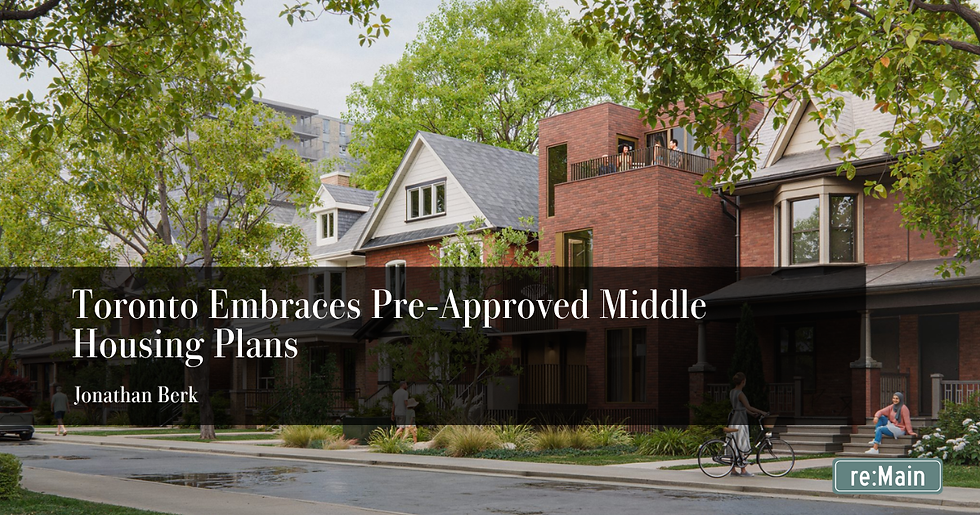
Middle housing isn’t luxury high-rise development. But in most places, it’s treated like it is. The report pushes for by-right approval, simplified permitting, and pre-approved plans to make it easier for small-scale builders and homeowners to contribute to our housing future. These are programs that have been embraced in places like South Bend and Kalamazoo but also adopted recently in Cities across Canada, including Kelowna.
6. Reform Building Codes for Small Multifamily
Right now, in Massachusetts, a triplex gets treated like a skyscraper. That means commercial code standards, sprinklers, stairwell requirements, and other mandates that make small-scale projects cost-prohibitive. We need a “missing middle code” something in between single-family and high-rise standards to make these homes feasible again.
Key Takeaways
Zoning is the root of the problem, and the solution. For decades, local rules have made it nearly impossible to build small, attainable homes. We need state-level intervention that still allows for local nuance but stops cities from saying “no” by default.
This isn’t uncharted territory. States like Oregon, Washington, Vermont, and Maine have already passed strong reforms. Massachusetts can, and should, build on their lessons.
This is about restoring, not reinventing. These housing types were once legal, common, and beloved. We're not trying to drop apartment towers into cul-de-sacs we’re trying to bring back homes that blend into neighborhoods and give people more options.
Messaging matters. Successful states have used economic and pragmatic arguments not just moral ones to make the case for reform. This is about affordability, local business, sustainability, and housing choice.
Missing middle housing won’t solve everything. But it’s one of the most immediate and politically feasible tools we have to start closing our massive housing shortage. It allows our communities to scale up to the next version of themselves, is one of the more politically feasible reforms in many more suburban communities and allows us to produce market rate affordability in new housing by building more units on large single family lots.
Massachusetts has a chance to lead. But it means finally letting go of outdated zoning that prioritizes exclusion over abundance and writing a new rulebook that works for the communities we need to build.
Jonathan Berk is an experienced strategic urbanist, attorney, and policy innovator with over a decade of expertise in promoting reforms in housing, land use, and economic development through impactful public-private initiatives. He possesses deep knowledge of the structural obstacles to housing production and economic growth, such as regulatory hurdles and financing challenges, and has a proven track record of creating collaborative solutions that unlock opportunities and achieve measurable results. He is a skilled communicator, published thought leader, and a trusted advisor to policymakers, planners, and advocates working where policy, capital, and community intersect.


Comments